META
DATE: NOVEMBER 7TH, 2025
TAGS: AI, MULTIPLAYER, RESEARCH, DESKTOP, WEB, TURN BASED
CONTRIBUTIONS: ENGINE, AI (PLAYER AND DIRECTOR), UI/UX, RESEARCH PLATFORM, SIMULATION HARNESS
ACKNOWLEDGMENTS: Back-end is full-custom Node.JS engine. Front-end is developed using Phaser. Expressive Range Analysis performed with the help of Oliver Withington, and sound design is done by Kyle Gonzales.
ABOUT
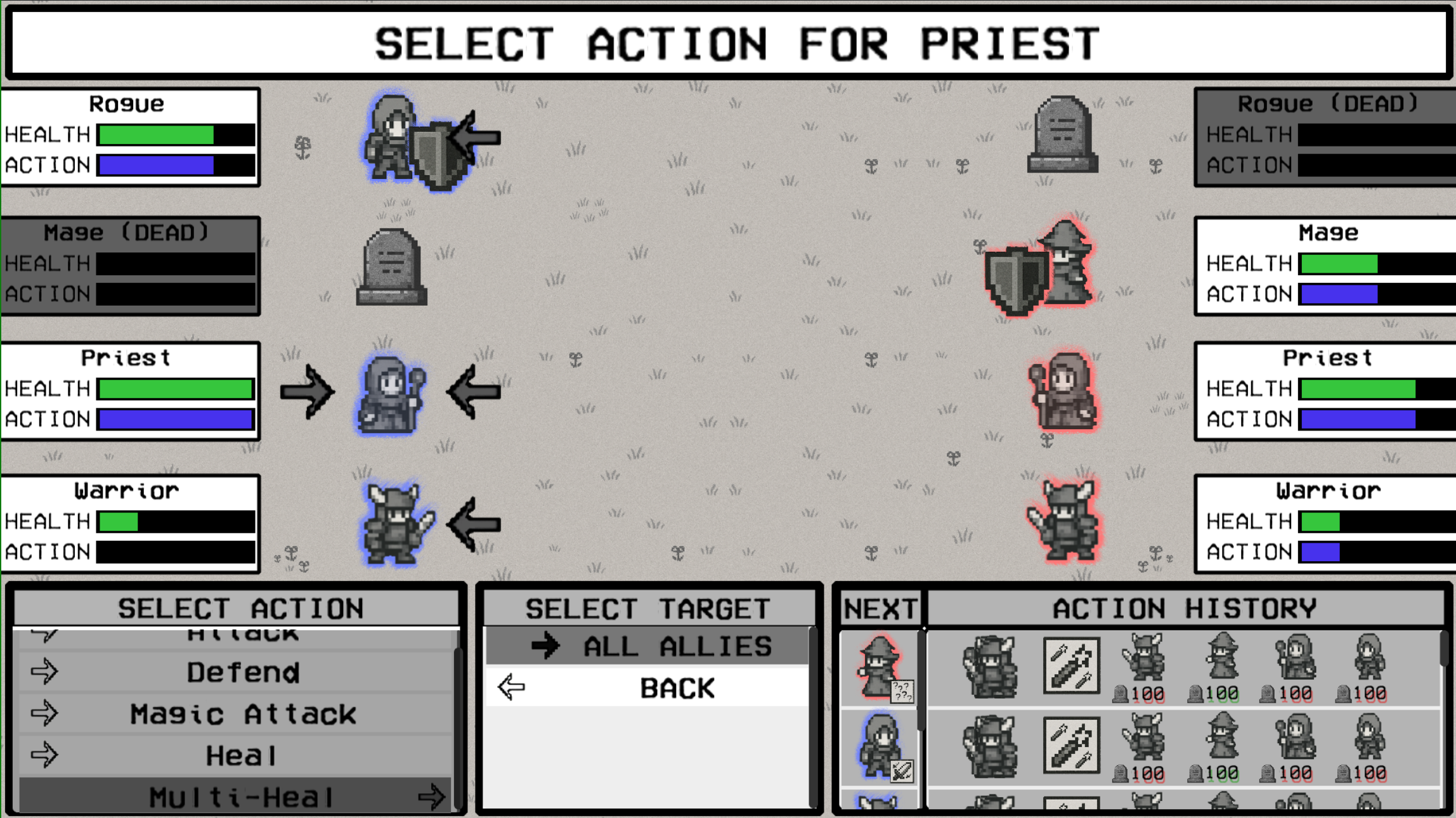
FighterDDA (Dynamic Difficulty Adjustment) is a research platform meant to investigate how AI Director architectures (in which an AI moderates game elements in response to game state to achieve specific player outcomes) can be modified to meet different personas of players. It extends questions brought up by BrawlerAGD, namely - if my audience is seeking competition, how do differences between players' skill level get detected and catered to? If a strong player is facing a weak player, how should we tune the game so that the weak player feels like they have a fighting chance? If we have two strong players, how do we tune the overall difficulty of the game to make it more or less challenging?
The back-end work was written headlessly (emulating a traditional turn-based role-playing game) so that agents of varying skill levels and persona types could be tested rapidly, data aggregated, and run through analysis strategies to understand if we are getting the character of games that we want to see in games. This approach is used to demonstrate how more sophisticated simulation and data visualization approaches can be used to quickly understand how a game is balanced with either human- or ai- generated playtraces. While it can't automatically balance your game for you, it can inch you towards what your balance should be and can tell you about the nuances of your game's balance.
Front-end user testing for research purposes is currently on-going. After data collection, the front-end will be released here.
TUTORIAL
The current public release of the game is a backend-only simulation. This was done to quickly evaluate different styles of AI-Director based game balancing, emulating thousands of games in seconds while producing metadata for research analysis. Installation and running instructions are located in the README of the repository linked above. I recommend tinkering with Director behaviors and the conditions of the harness to see what kinds of simulation outcomes you can achieve. More advanced designers can also modify the player agents to see how character behaviors impact the director interactions.